

In the world of government contracting, few words generate as much collective groan as “compliance.”
It’s the cost of doing business — a labyrinth of requirements, certifications, rules, and reporting that seems designed to make simple things harder. Whether it’s managing FAR and DFARS clauses, preparing for audits, or ensuring delivery milestones are documented, compliance often feels like overhead. Necessary, yes — but burdensome.
But the best-performing federal contractors don’t treat compliance that way. They see something different: opportunity.
For these organizations, contract compliance is no longer just about staying out of trouble — it’s a strategic lever for trust, performance, and growth.
Why Compliance Matters More Than Ever
Federal contracts are governed by a web of regulations that far exceed the demands of typical commercial agreements. These include:
- Precise adherence to contract clauses
- Rigid approval paths and funding thresholds
- Security standards like FedRAMP and CMMC
- Flowdown of requirements to subcontractors
- Proof of performance on all deliverables
- Documented audit trails and approval chains
Failure to comply can mean contract termination, lost recompetes, financial penalties — or worse. The stakes are real. But so are the opportunities.
Organizations that excel at compliance can turn it into a competitive differentiator. They are trusted more deeply by contracting officers. They deliver more consistently. They suffer fewer disruptions.
And perhaps most importantly: they spend less time scrambling and more time executing.
The Real Problem: Fragmentation and Manual Work
What makes compliance so hard isn’t the rules themselves — it’s how most organizations attempt to manage them.
Data is scattered across email inboxes, spreadsheets, shared drives, and standalone tools. Teams operate in silos. Funding alerts are missed because there’s no automatic monitoring. Deliverables fall behind because tasks weren’t clearly assigned or even worse they were not created to be tracked. Modifications are recorded late — or not at all.
This fragmented approach means that even when you’re trying to comply, you’re at risk of falling short. It also makes everyday execution harder. You lose time chasing information, reconciling systems, and manually checking things that should have been obvious.
The Shift: From Reactive Compliance to Strategic Execution
In high-functioning GovCon organizations, compliance isn’t viewed as a separate activity. It’s built into how the work is done.
Here’s what that shift looks like:
| From | To |
|---|---|
| Siloed tracking | Centralized system of record |
| Manual data entry | Automated clause and funding updates |
| Missed dates and thresholds | Real-time alerts and task assignment |
| Fragmented handoffs | Cross-functional workflows |
| Compliance as overhead | Compliance as operational advantage |
It’s not about “doing more compliance.” It’s about designing systems and processes so that compliance happens as a natural outcome of daily work.
How High-Performing Contractors Approach It Differently
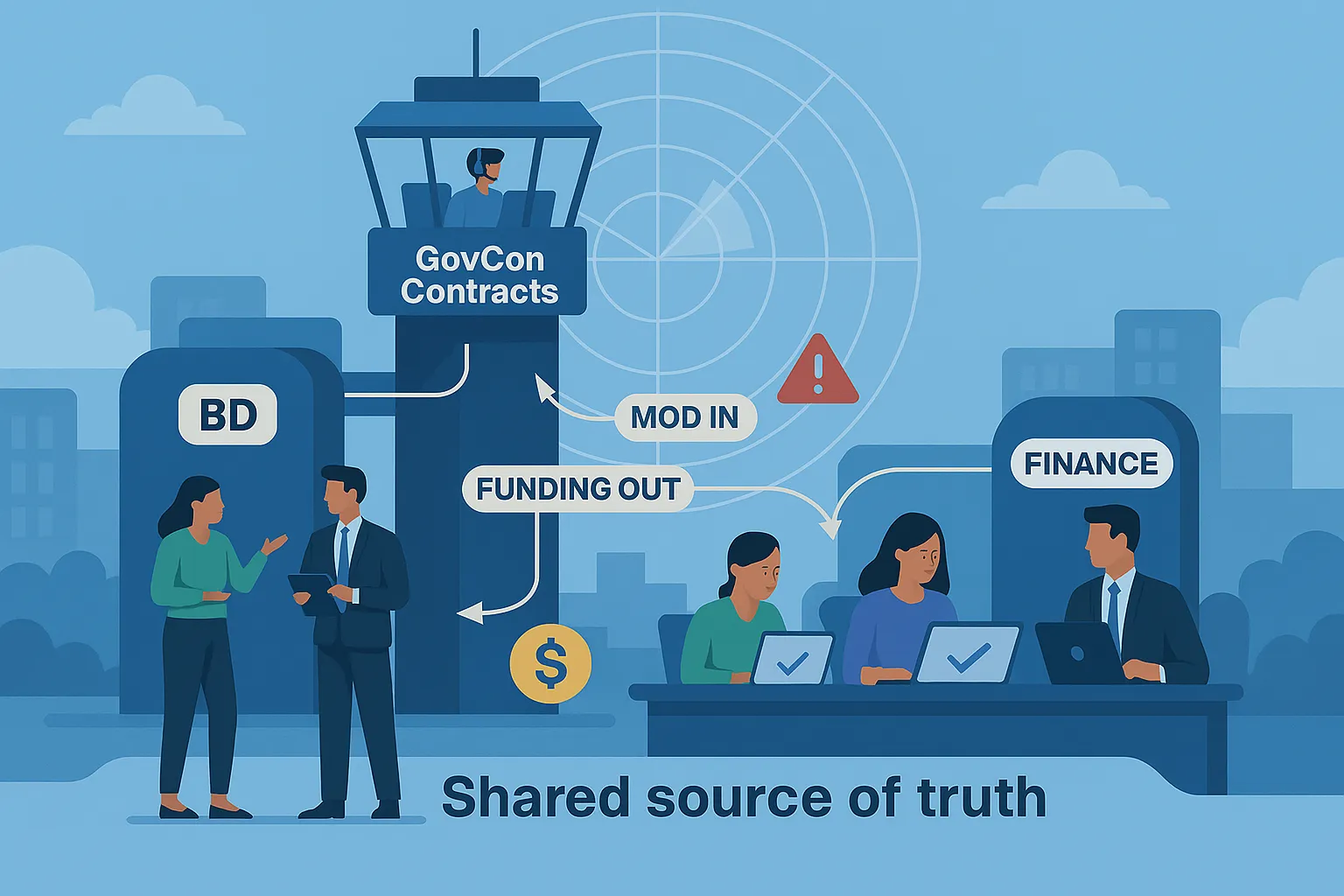
The contractors leading the way in this shift tend to share several characteristics:
-
They Use a Single Source of Truth
All contract records — including awards, modifications, clauses, deliverables, funding lines, and subcontracts — are stored in one authoritative system. This eliminates the risk of conflicting trackers and missing information.
-
They Manage Clauses and Flowdowns Systematically
Rather than tracking clauses in spreadsheets, they maintain a structured clause library, monitor flowdowns, and link everything back to specific contracts and subcontracts. This supports clearer compliance tracking and faster responses to changes.
-
They Monitor Compliance Triggers Proactively
Key thresholds — like 70% funding levels, approaching end dates, or overdue deliverables — are watched automatically. Stakeholders receive alerts based on their role, ensuring nothing slips through the cracks. They are able to track funding levels at the CLIN level.
-
They Embed Workflows Across Departments
From onboarding new contracts to initiating modifications or tracking CDRLs, workflows are standardized and shared. Business development, contracts, PMs, finance, and compliance each play their part — in sync.
-
They Focus on Actionable Visibility
Dashboards and reports are more than just status updates. They drive activity — showing what needs attention, what’s overdue, and what’s coming next. Everyone works from the same data, with the same priorities.
What Changes When You Get It Right
Making the shift from reactive compliance to strategic execution isn’t just about checking boxes more efficiently — it’s about transforming how your organization operates.
💡 You reduce the burden on your people
Instead of wasting time on manual updates, data entry, and status checks, your team focuses on analysis, decision-making, and customer engagement.
⏱️ You move faster, with fewer errors
Automated updates and workflows reduce rework, miscommunication, and bottlenecks. Modifications are processed more quickly. Deliverables are tracked more reliably.
🔒 You improve audit readiness and accountability
With a documented trail of approvals, clause reviews, and performance milestones, audit prep becomes a search — not a scramble.
📈 You gain strategic agility
Because you can trust your contract data, you’re better positioned to pursue recompetes, act on funding changes, and demonstrate value in proposals.
Examples of Strategic Compliance in Action
Supporting CPARs and Recompetes
Well-documented clause tracking, deliverable performance, and modification history helps improve CPAR scores — and makes proposal development faster and more accurate.
Navigating Audits with Confidence
Audit teams can see real-time logs, review histories, and status changes without interrupting ongoing work — because everything is traceable and timestamped.
Speeding Post-Award Execution
New contracts are onboarded faster when roles, responsibilities, and workflows are already in place. Key dates and tasks are visible from day one.
A Mindset Shift That Pays Off
The most successful GovCon organizations are treating compliance not as a cost center, but as an enabler. They view contract execution as a system with many participants across the organization — one where structure, automation, and collaboration drive performance.
This mindset shift is not just about tools. It’s about leadership. About recognizing that precision is power — not just protection.
Ready to Rethink Your Approach?
Modern contract execution doesn’t have to be manual, fragmented, or reactive. You can build a system that’s designed for the realities of GovCon — and flexible enough to support your growth.
Want to see how purpose-built contract systems that leverage AI can turn compliance into a strategic edge?
Explore smarter ways to manage federal contracts →